2026 Recipients

Valentina Consonni
Universidad Autónoma del Estado de Morelos UAEM, México
An Italian researcher, indefatigable reader and unapologetic tea enthusiast, she couldn't live without Kant, Plato, Illich, Proust, Gaudí, and her beloved tailless cat. Across a wide range of academic, professional, and cultural experiences around the world, a persistent intellectual concern has accompanied her: the profound and complex relationship between humankind and art.
She holds a degree in Philosophy from the Università Statale di Milano, a master's degree in Advanced Studies in Art History from the Universitat de Barcelona and a second one in Art and Literature from the UAEM in Cuernavaca. She is currently in a doctoral program in the Humanities, writing a critique of the use of artificial intelligence in the world of artistic production.

Deniz İlkay Dal
Özyeğin University, Turkey
Deniz İlkay Dal is a PhD candidate in Design, Technology and Society at Özyeğin University. Her research focuses on cognitive film theory, perception, and spectatorship. She completed her BA in Philosophy at Boğaziçi University, graduating with honors, and minored in Film Studies. She later pursued an MA in Film and Photographic Studies at Leiden University as a Mithat Alam Film Center scholar. Alongside her academic work, she continues to develop her practice as a filmmaker and writes on cinema.
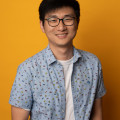
Zida Wang
University of Nevada, Las Vegas Marjorie Barrick Museum of Art, United States
Zida Wang, Ph.D. is a museum educator, curator, and scholar whose work explores visitor-centered curation, collaborative exhibition practices, and digital curation. He works as the Manager of Academic and Community Engagement at the Marjorie Barrick Museum of Art at the University of Nevada, Las Vegas. Zida holds a Ph.D. in Museum Education and Visitor-Centered Curation from Florida State University. His research examines how museums can create more inclusive and participatory spaces through collaboration, technology, and diverse perspectives. He is the co-editor of Creating Digital Exhibitions: A Practical Guide, published by Bloomsbury in 2026.

Tomomi Sayuda
The University of Tokyo, Japan
Tomomi Sayuda is a Research Associate at the DLX Design Lab, Institute of Industrial Science, The University of Tokyo. She holds a PhD in Media and Governance from Keio University and an MA in Design Products from the Royal College of Art. Her work has been recognized with the WIRED Creative Hack Award Grand Prix, the Japan Media Arts Festival, and a Core77 Award. After a career in experiential and service design in London, Dubai, and Tokyo, she now directs and implements international design-led science projects grounded in citizen-participatory research. She has served as a Special Lecturer at Musashino Art University, a Visiting Senior Research Fellow at the National University of Singapore, a D&AD judge, and a Good Design Award jury member.

Elyse Longair
Queen's University, Canada
Elyse Longair is an artist, curator, and image theorist currently pursuing her Ph.D. in Screen Cultures and Curatorial Studies at Queen’s University. Longair’s research focuses on collage history, collage as research creation, and institutional strategies of collecting and curating collage. Her Infrathin/Infraslim Image Theory in collage examines artists who use a flat seamless aesthetic where the thin space or gap between image fragments becomes less and less, nearly invisible. In this thin, infraslim space, the viewer can imagine freely the possibility of the image, and the roles of picture making and imagination.

Christos Prosylis
National and Kapodistrian University of Athens, Greece
Christos Prosylis is an internationally recognized avant-garde artist, academic, and researcher blending new technologies with creative practice. A PhD candidate (National and Kapodistrian University of Athens, Department of Theatre Studies) holding a Master’s in Digital Arts, he is the creator of the Acting Code method. His multidisciplinary career highlights extensive artistic and research work in film and theatre directing, performing arts, visual arts, video art, and new media art showcased globally. A veteran drama professor and writer, Prosylis also serves as the Founder and Artistic Director of the Cosmotheatro art research group, the Acting Code Institute, the London Greek Film Festival, and the Epidaurus International Film Festival, combining deep philosophical research with continuous, cutting-edge artistic innovation.

Hemaharini Kishor
LASALLE College of the Arts, Singapore
Hemaharini Kishor is an Industrial Designer and artist from India, currently pursuing her Master's in Design at LASALLE College of the Arts, Singapore. Driven by a passion for industrial art, her work spans a woodpecker-inspired coffee maker, a foldable industrial mouse, intricate metal artwork, and research into optimised workspace setups for creative fields. Inspired by pioneers like David Carson and Dieter Rams, she grounds her practice in raw material exploration, user behaviour studies, and tactile design. She is also a street photographer capturing the vibrant mood of Indian streets, as well as a surfer and pre-national-level 10m air pistol shooter.

Han Xinrui Caryl
LASALLE College of the Arts, Singapore
Caryl is a Singapore-based designer and emerging researcher exploring the intersections of design, education, and social change. Drawing from her background in communications and design, her current Master’s research investigates how Design Thinking can be meaningfully integrated into Singapore’s primary Art education. She enjoys exploring ways to bridge educational policy and classroom practice, through research, visual storytelling, and systems design to make learner-centred creative education more accessible in the future Singapore.

Quinny Vu Thi Ngoc Khuyen
LASALLE College of the Arts, Singapore
Quinny Vu Thi Ngoc Khuyen is a strategic design lead who creates holistic experiences through service design. Rooted in human-centred design, she bridges organisations and the people they serve by shaping touchpoints that integrate strategy, environment, communication and seamless online–offline interaction.
She is currently Lead Designer with the Government Technology Consulting team at GovTech Singapore, working at the intersection of service and product design to lead the modernisation of critical government systems. She is also pursuing an MA in Design at the University of the Arts Singapore. Previously, she was Director of Communication and Digital Experience at Eight Inc. Singapore.